
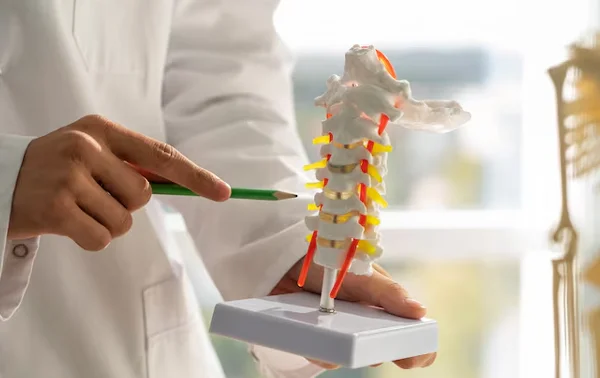
Spinal Fusion Surgery in Faridabad, Haryana, is a highly specialized procedure designed to stabilize the spine by permanently joining two or more vertebrae. This surgery is recommended for patients with spinal instability, severe deformities, or chronic pain due to degenerative spine conditions. Dr. Bhoopendra Foujdar, a leading spine and brain surgeon, offers advanced spinal fusion techniques to restore stability, relieve pain, and improve overall function.
What Is Spinal Fusion Surgery?
Spinal Fusion Surgery involves fusing two or more vertebrae using bone grafts, screws, rods, or cages.
The goal is to prevent abnormal motion, relieve nerve compression, and correct deformities while maintaining spinal alignment.
About The Condition:
Spine instability or deformity can result from trauma, degenerative diseases, or congenital abnormalities.
Unstable vertebrae may compress nerves, causing pain, weakness, or numbness.
Without stabilization, spinal instability can worsen, affecting posture and daily activities.
Goals Of Surgery:
Stabilize the spine and prevent further injury
Correct spinal deformity or misalignment
Relieve nerve compression and pain
Improve posture, mobility, and quality of life
Why Does It Happen?
Spinal instability requiring fusion may occur due to:
Degenerative disc disease or arthritis
Spinal fractures or trauma
Spondylolisthesis (vertebra slippage)
Tumors or infections affecting vertebrae
Congenital spine deformities
Symptoms Indicating Spinal Fusion Surgery:
Persistent back or neck pain unrelieved by medications
Radiating pain, numbness, or tingling in arms or legs
Weakness in limbs
Visible spinal deformity or abnormal posture
Limited mobility affecting daily life
How Is It Treated?
Non-Surgical Treatments:
Pain medications and anti-inflammatory therapy
Physical therapy and exercises to strengthen spine
Bracing to support the spine
Surgical Treatment – Spinal Fusion Techniques:
Posterior Spinal Fusion: Stabilizes vertebrae from the back
Anterior Spinal Fusion: Fuses vertebrae from the front for alignment correction
Minimally Invasive Fusion: Uses small incisions and tubular instruments for reduced tissue damage
Dr. Bhoopendra Foujdar combines microsurgical techniques with advanced imaging to ensure safe, accurate fusion and optimal outcomes.
Why Choose Dr. Bhoopendra Foujdar?
AIIMS New Delhi trained spine and neurosurgeon
13+ years of experience in spine and brain surgeries
5000+ successful neurosurgical procedures
Expertise in complex and minimally invasive spinal fusion
Personalized, ethical, and patient-centered care
Advanced Technology & Surgical Precision:
High-resolution MRI & CT for preoperative planning
Intraoperative navigation and neuromonitoring for accuracy
Advanced operating microscopes
Ensures precise placement of implants and optimal spinal stability
Recovery & Outcomes:
Hospital stay: 3–5 days
Pain relief begins soon after surgery
Gradual return to daily activities under supervision
Long-term spinal stability and improved posture
Enhanced mobility and overall quality of life
FAQs:
Is spinal fusion surgery safe?
Yes, it is safe when performed by an experienced spine surgeon using modern techniques.
Will my spine lose mobility after fusion?
Some motion is restricted at the fused segment, but overall spinal function improves.
How long is recovery?
Recovery typically takes a few weeks to months, depending on the extent of fusion.
Can pain return after fusion?
Most patients experience long-term relief, though adjacent segment degeneration may occur over time.
Is surgery always required?
Surgery is recommended when conservative treatments fail or spinal instability threatens neurological function.


